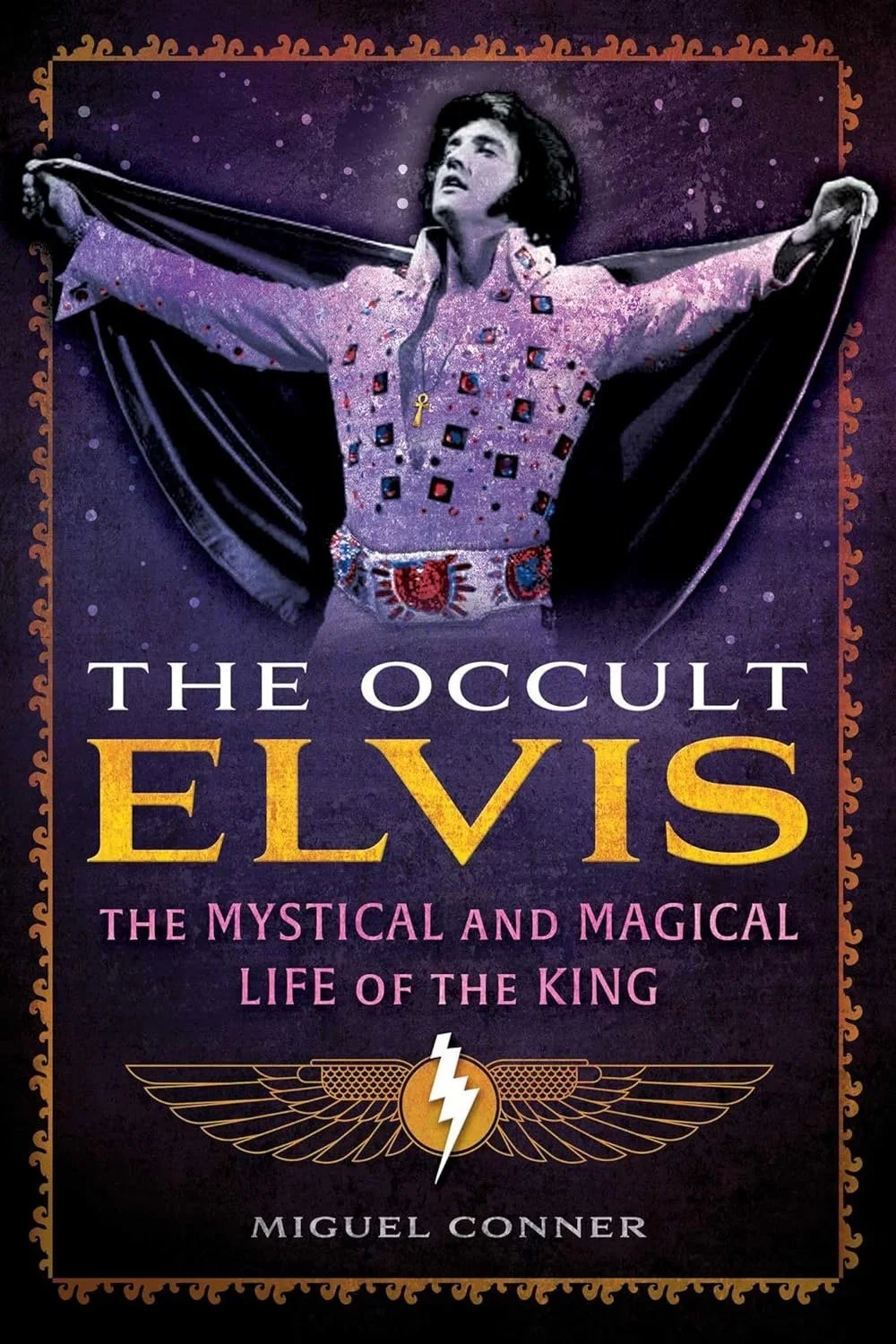
The secondhand nature of the book’s research means that the reader will gain nothing from The Occult Elvis that could not be gleaned from other, better books. It is an inferior version of The Seeker King, which is itself only the last in a line of at least a dozen books about Elvis’s spiritual quest.
I am not terribly interested in Elvis Presley and have only a general knowledge of his life, so I admit to finding it interesting that so many aspects of Elvis’s spiritual journey paralleled those of James Dean. Some of the Elvis quotations Connor gleans from his sources surprised me in how similar they were to Dean’s own words about life, death, the unreality of this world, and the desire to find a larger truth. Out of context, you would be hard pressed to tell who said which. They also both shared a certain immaturity, a teenager’s paperback idea of sophistication; and they both moved beyond traditional Christianity toward something closer to universalism.
But the differences are equally important. Dean never claimed to have magical powers, and he felt destiny imposed sometimes unwanted obligations on him, not that he had become an avatar of divine forces. Elvis, by contrast, lived longer than Dean. The money, the fame, and the drugs inflated his sense of self-importance and cosmic destiny. If James Dean’s spiritual journey was defined by his conviction that he was cursed and evil, Elvis’s was the opposite, too certain of his own greatness.