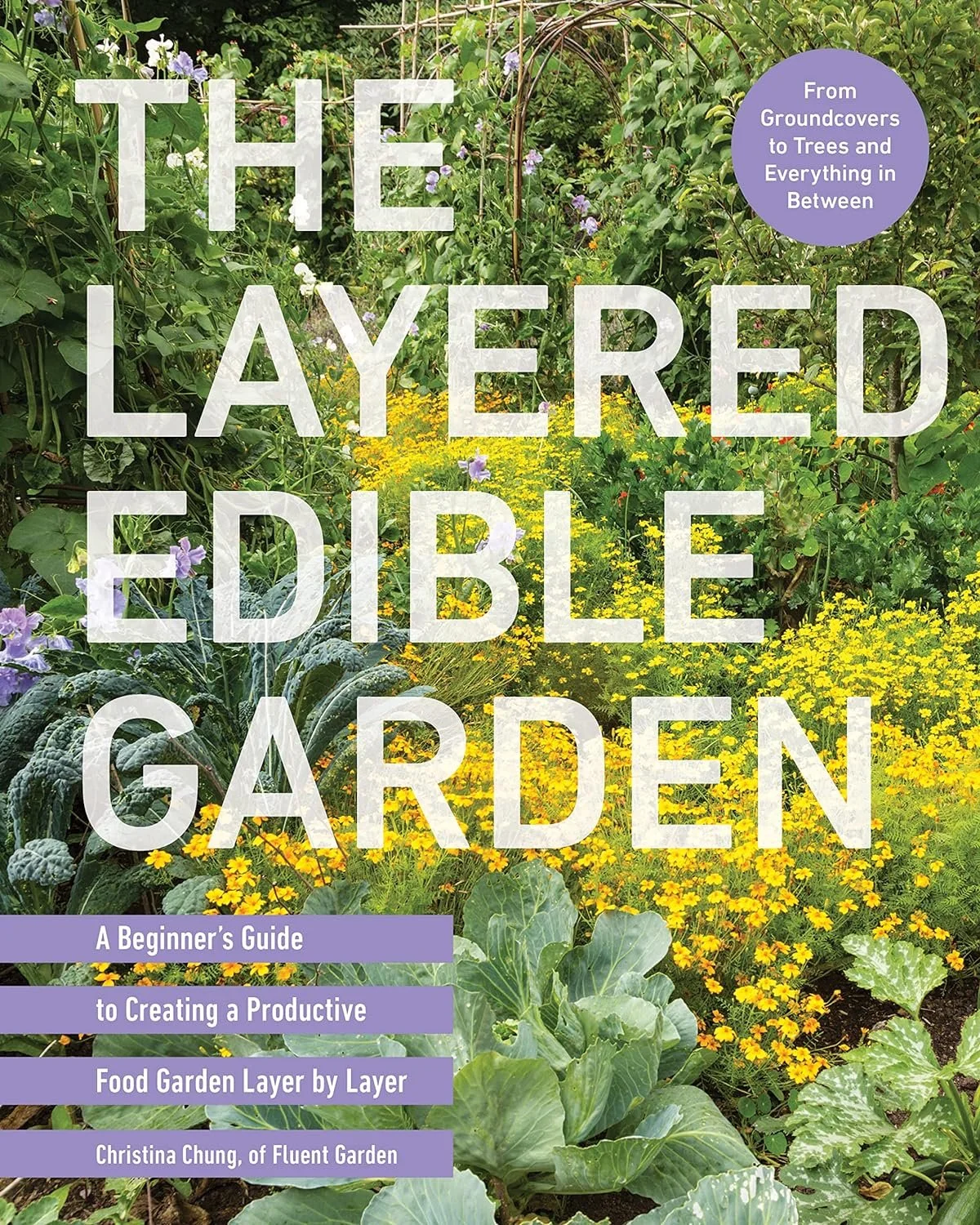
“Chung has broken away from growing a traditional vegetable garden in raised beds and neat rows. Now she incorporates layers of edible plants in every available space and has expanded her food palate by choosing a diverse range of plants that have edible fruit, flowers, leaves, stems, roots, or seeds. By filling every space with a diversity of edible plants, Chung’s garden has fewer weeds and fewer pest and disease problems.
Curiosity and a willingness to experiment with plants that are unique to you, says Chung, can help you create your own thoughtfully designed food forest with a combination of trees, sub-canopy trees, shrubs, climbers, herbaceous perennials, annuals, ground covers and edible roots. These are the eight layers of a layered edible garden. But you can also grow food in fewer layers, she says.”
~ Colleen Zacharias