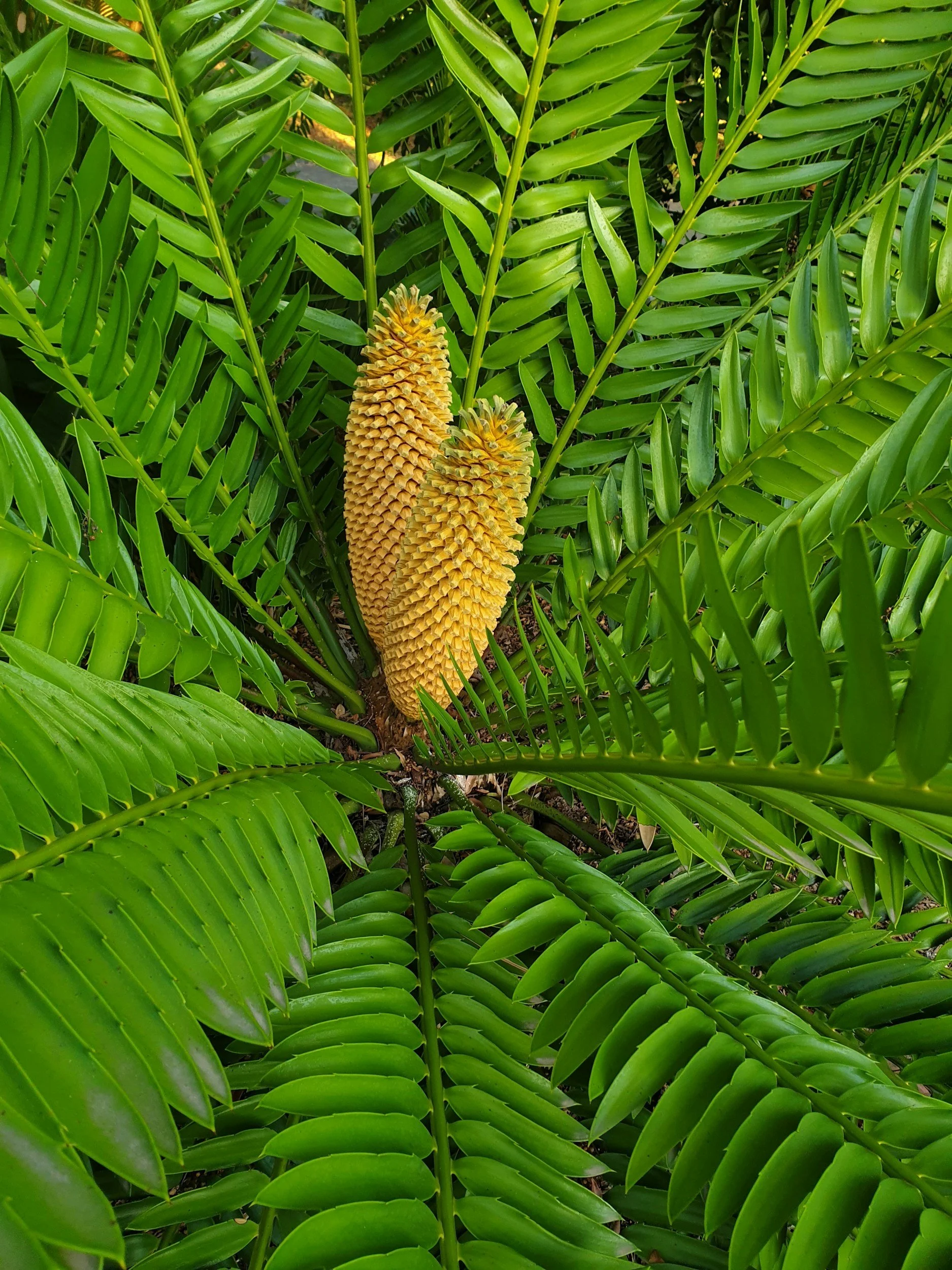
The hot gonads of some plants attract pollinators.
Harvard researchers have discovered that cycads — one of the oldest living lineages of seed plants — heat up their reproductive organs to attract beetle pollinators, which possess infrared sensors that take notice.
First, the male cycads warm their pollen cones to entice beetles. Then, the female cycads similarly get hot and the insects follow — thereby spreading the cycads’ genetic material, enabling the plants to reproduce.
The new study, published in a cover story in Science, marks the first time that infrared radiation has been identified as a pollination signal — one far older than the splendorous colors that later become dominant among flowering plants.
“This is basically adding a new dimension of information that plants and animals are using to communicate that we didn't know about before,” said lead author Wendy Valencia-Montoya. “We knew of scent and we knew of color, but we didn't know that infrared could act as a pollination signal.”
In fact, heat may be one of the most ancient modes of communication between animals and plants. It may even predate the dinosaurs.
“Long before petals and perfume, plants and beetles found each other by feeling the warmth.”
The findings shed new light on the ancient alliance between plants and pollinators. It has long been known that many plant species warm their pollination cones or flowers by cranking up their metabolism. But it was widely assumed that the heat was mostly just to help volatilize the scents.
As the oldest known seed plants pollinated by animals, cycads are sometimes called “living fossils” and have long aroused fascination among biologists. The plants have stout trunks and crowns of featherlike leaves and resemble palms and ferns, but are not closely related to either.
Cycads appeared around 275 million years ago and reached their peak diversity around 150 million years ago during the Jurassic period. They were largely displaced by the rise of flowering plants, which became the dominant group in the last 70 million years.
Today about 300 cycad species remain, most of them listed as endangered.