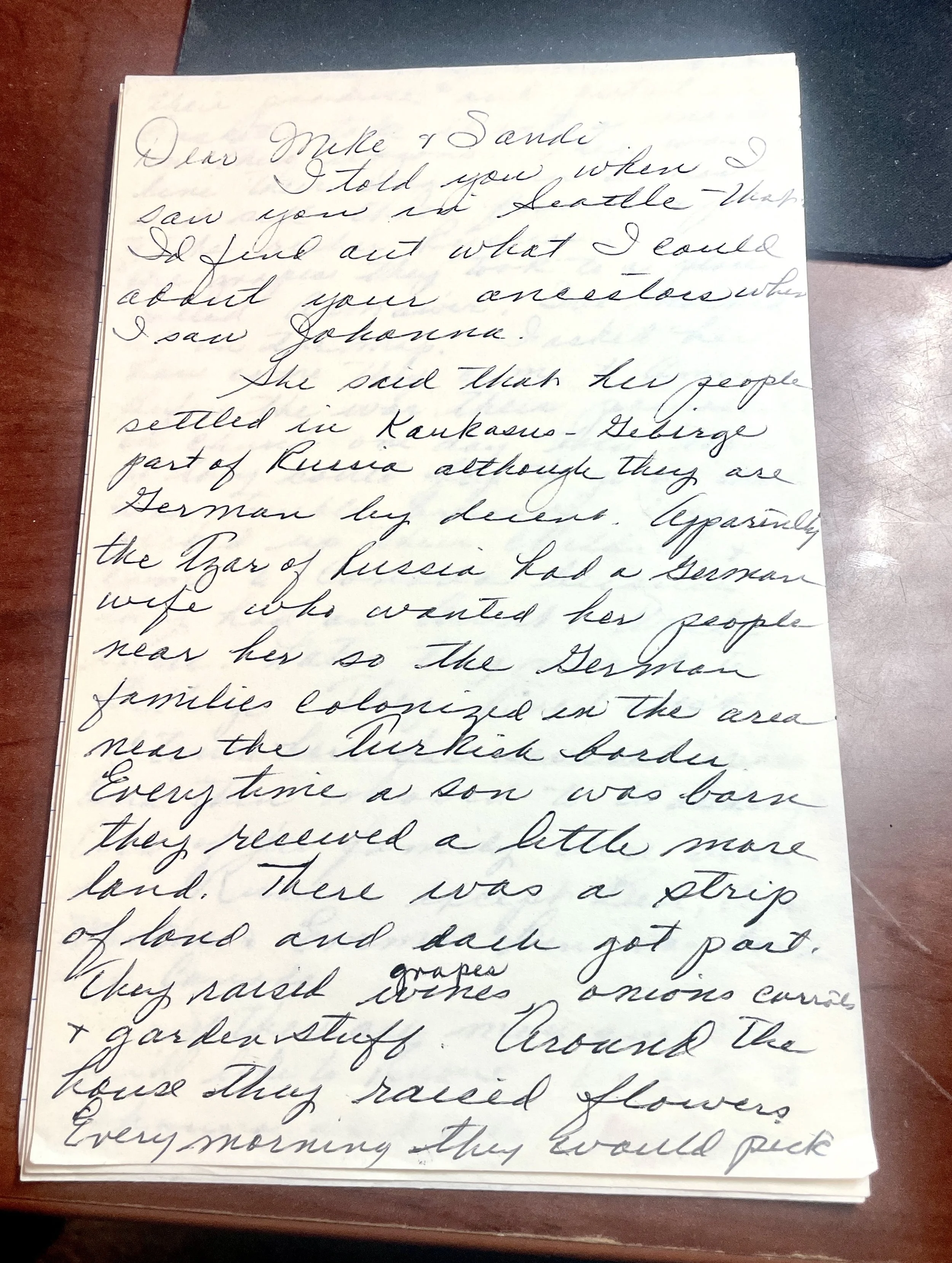
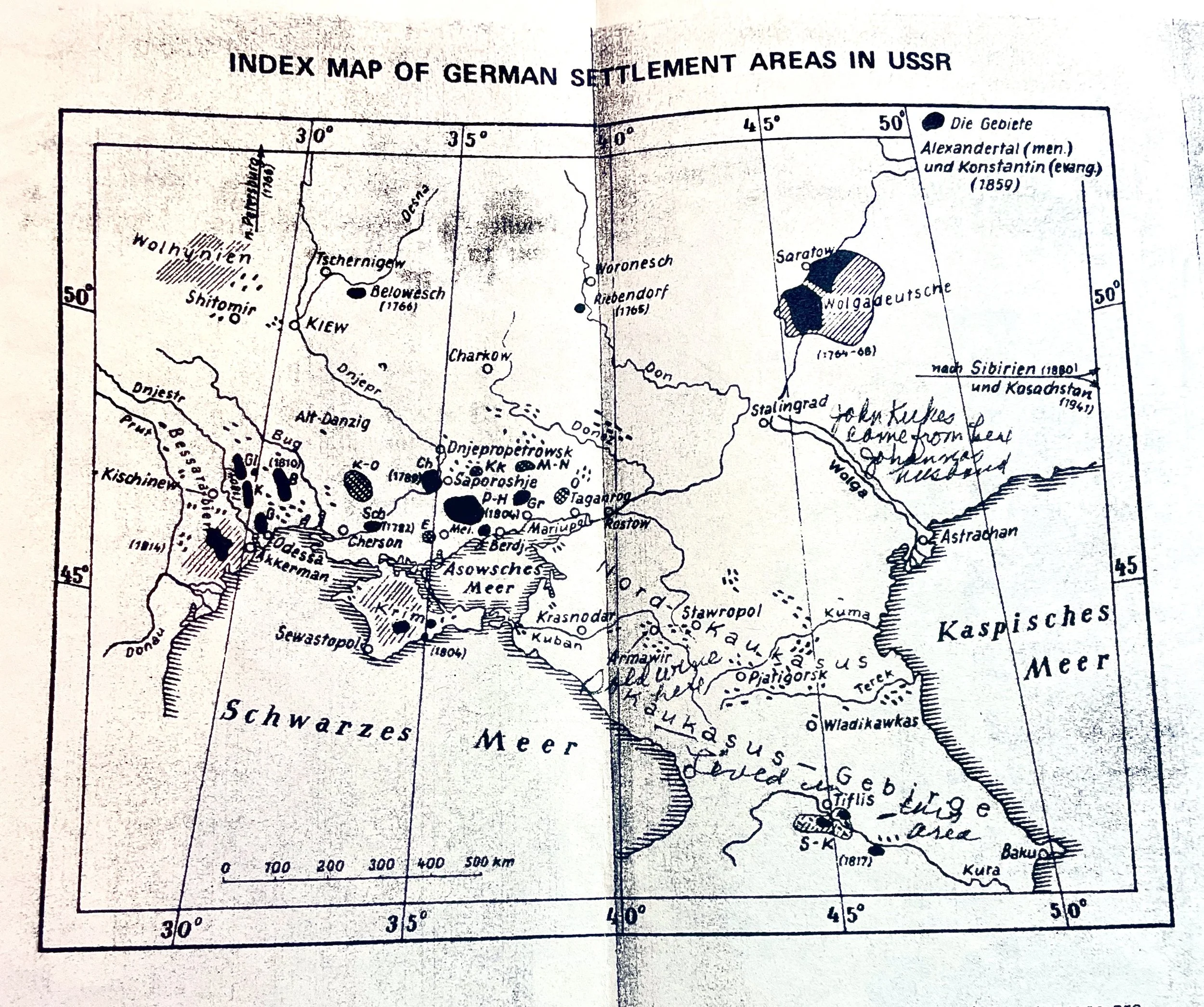
According to Johanna Hofferber, oldest sister of Benjamin and my father’s aunt, born in Russia in 1904, her family lived near the Kaukasus-Gebirge mountains in southern Russia between the Black Sea and the Caspian Sea not far from or perhaps part of present-day Tblisi in Georgia.
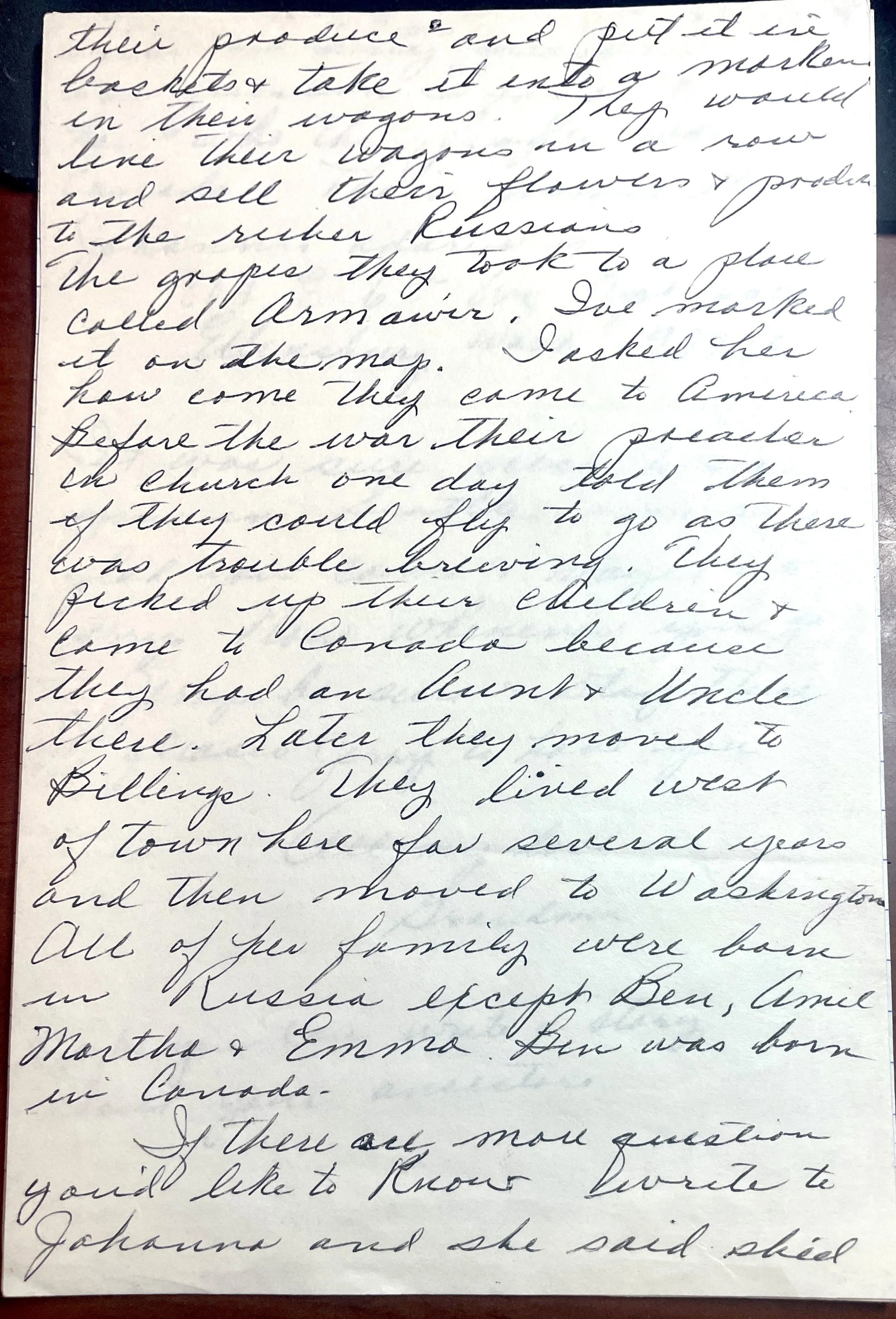
“They raised grape vines, onions, carrots, and garden stuff,” she told my grandmother Amelia. “Around the house they raised flowers. Every morning they would pick their produce and put it in baskets and take it into a market in their wagons. They would line their wagons in a row and sell their flowers and produce to the richer Russians.”
The grapes they took to a place called Armawir, a rail junction and industrial city on the Kuban River, known for food processing, machine building, and timber-working industries.
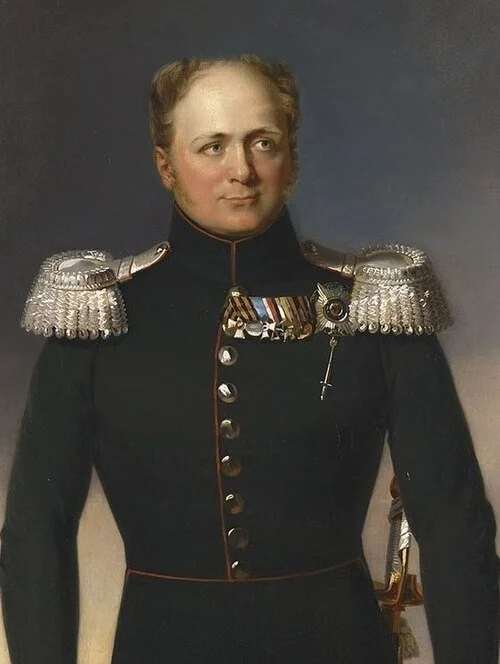
Germans settled in the Caucasus Mountains region at the invitation of Tsar Alexander I in 1817 or thereabouts. Like the “Volga Germans” who settled further north in the Volga River region of Russia in the 1760s under Catherine the Great, these skilled farmers were recruited to populate and develop recently conquered territories with loyalists who received land, religious freedom, and other incentives.
Tsar Alexander I, grandson of Catherine the Great, arranged the relocation of oppressed Swabian peasants from the Württemberg area of Germany (non-Lutheran Protestants facing religious persecution or poverty) to form productive colonies near cities and trade routes in the Caucasus region.
Initial German settlements in the Caucasus began in 1817–1818, with the first colony, Marienfeld (now part of Sartichala, Georgia), founded on September 21, 1818, by Swabian Germans near Tiflis (Tbilisi). From Johanna’s map, this was likely the colony that included the Hofferbers in our ancestry.
These settlements survived for a hundred years at most. The Caucasus had been incorporated into the Russian Empire through conquest, colonization, and heavy-handed rule, and its population included many groups with competing loyalties and grievances. That made the region politically tense in the years before World War I.
My grandmother asked Johanna what brought them to America. “Before the War, their preacher in church one day told them if they could fly, to go, as there was trouble brewing.”
In 1911, Russian authorities cracked down on religious leaders in the Caucasus, exiling many of them. And by 1913, unrest across the empire had intensified, with a sharp rise in strikes and political agitation, and discontent was spreading into the military as well.
Military conscription was a major concern in Russian-German communities. While Catherine the Great's 1763 Manifesto granted German colonists perpetual freedom from military service, Tsar Alexander II revoked these privileges in the early 1870s to implement universal conscription. Concerned that their sons might be abducted and forced into service, many German families opted to leave Russia.
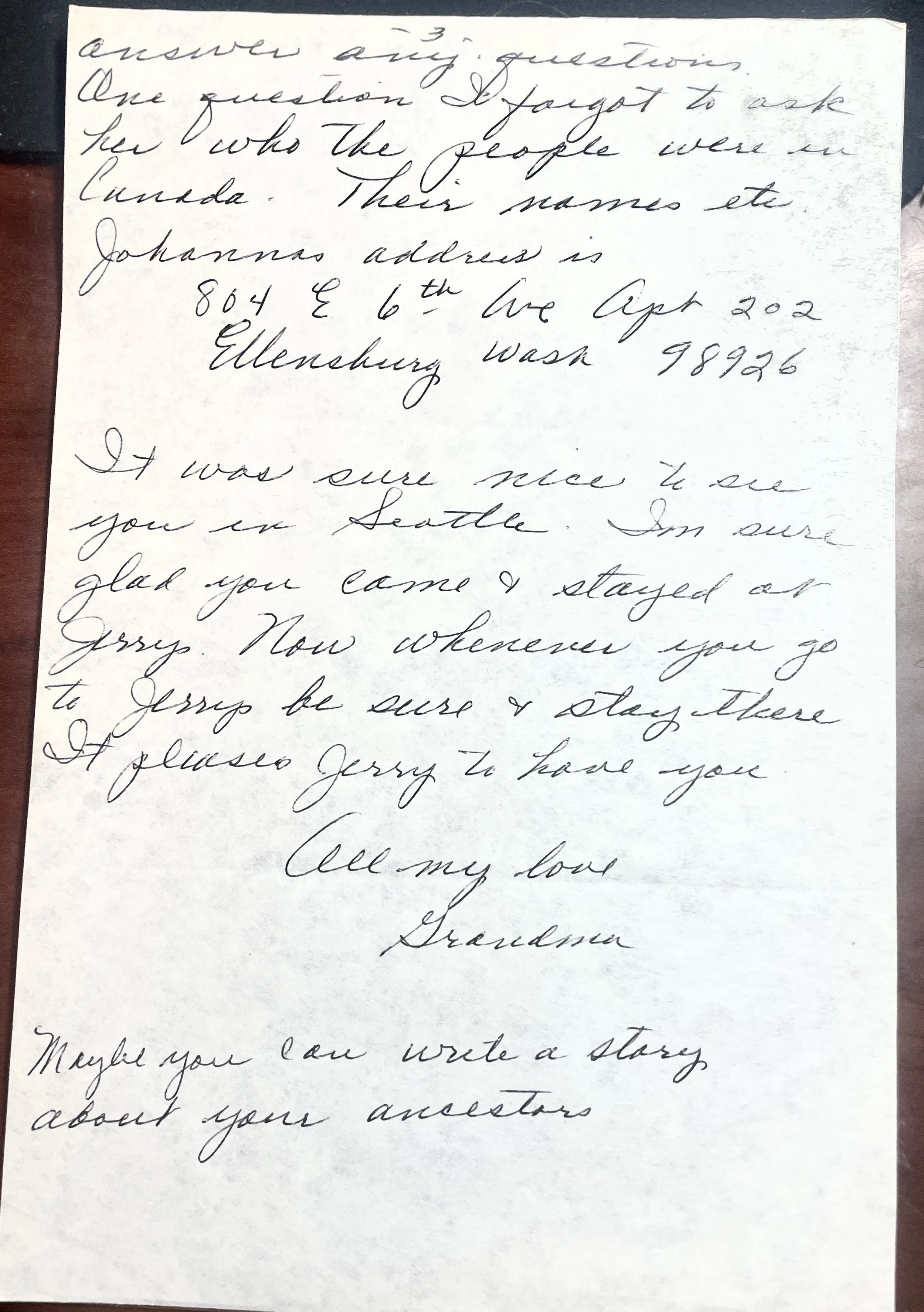
“They picked up their children and came to Canada because they had an aunt and uncle there. Later, they moved to Billings (Montana)
Tsar Alexander I