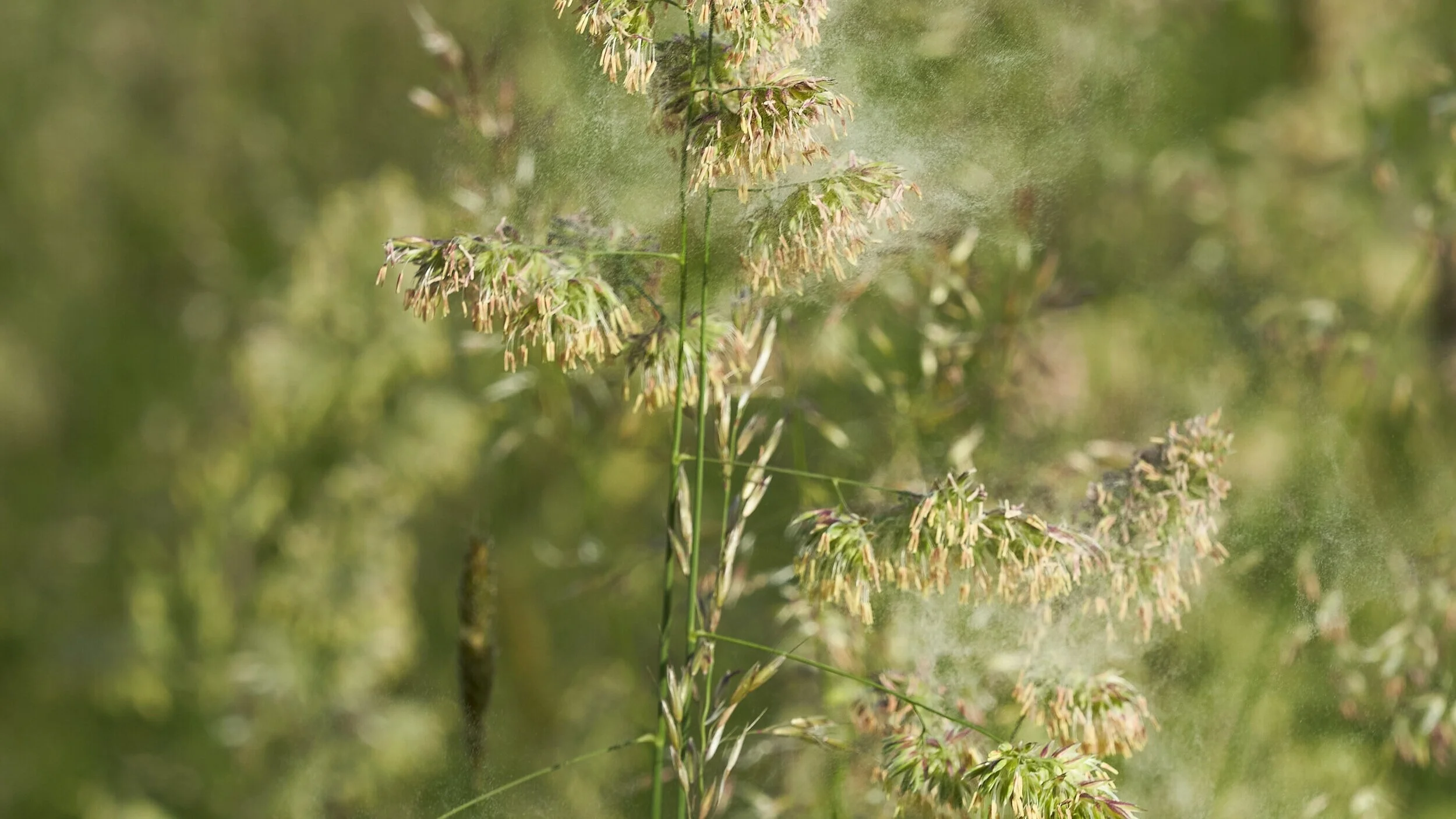
Allergies can easily cloud the enjoyment of a beautiful garden or landscape. A major source of allergy suffering is the pollen emitted from flowers of trees, shrubs, grasses, and weeds. Although most plants bloom and spread pollen for just a short period, something is almost always blooming. In early spring, it's the trees and shrubs. In summer the main pollen source is flowering grasses. In late summer and fall, weedy plants from roadsides are the problem.
Fortunately, not all pollen causes allergies, and plant scientists have determined which plants are the most allergenic and which are benign.
The best way to manage allergens in a landscape is by recognizing and identifying the plants that produce pollen. It is not possible to completely eliminate allergens, as airborne pollen travels great distances, but the immediate area can be greatly improved or protected through careful planting of non-allergic species.
The greatest allergy offenders are grasses and weeds Try to keep them from blooming by mowing and using weed management programs. For some dioecious plants, plant the female instead of the male plant; it's the males that produce pollen and female plants produce all the seeds.
Allergenic Trees
The following species have a history of causing allergy suffering from March through May:
Acacia (Acacia sp.)
Maple (Acer sp.)
Alder (Alnus sp.)
Birch (Betula sp.)
Hickory (Carya sp.)
Pecan (Carya pecan)
Hackberry (Celtis sp.)
Arizona cypress (Cupressus arizonica)
Italian cypress (Cupressus sempervirens)
Beech (Fagus sp.)
Ash (Fraxinus sp.)
Juniper (Juniperus sp.)
Poplar (Liriodendron sp.)
Walnut (Juglans sp.)
Mulberry (Morus sp.)
Olive (Olea europaea)
Sycamore (Platanus sp.)
Cottonwood (Populus sp.)
Oak (Quercus sp.)
Pepper tree (Schinus molle)
Western red cedar (Thuja plicata)
Elm (Ulmus sp.)
Grasses
Grasses are generally more powerful allergens than trees and bloom from May through summer. Allergenic grasses include...
Redtop (Agrostis sp.)
Sweet vernal (Anthoxanthum odoratum)
Bermuda (Cynodon dactylon)
Orchard (Dactylis glomerata)
Fescue (Festuca sp.)
Velvet (Holcus sp.)
Rye (Lolium perenne)
Timothy (Phleum pratense)
Bluegrass (Poa sp.)
Johnson (Sorghum halepense)
Weeds
Common and giant ragweeds (Ambrosia sp.) are serious hazards to hay fever sufferers. Both types of ragweed are included on noxious weed lists in many areas. Other late-summer and fall allergenic weeds include…
Pigweed (Amaranthus sp.)
Sagebrush (Artemisia ludoviciana)
Mugwort (Artemisia vulgaris)
Lamb's-quarters (Chenopodium album)
Summer cypress (Kochia scoparia)
Alfalfa (Medicago sativa)
Plantain (Plantago sp.)
Sorrel (Rumex sp.)
Tumbleweed, Russian thistle (Salsola kali, also S. tragus, S. iberica, S. australis)
Nettle (Urtica sp.)
Cocklebur (Xanthium strumarium)