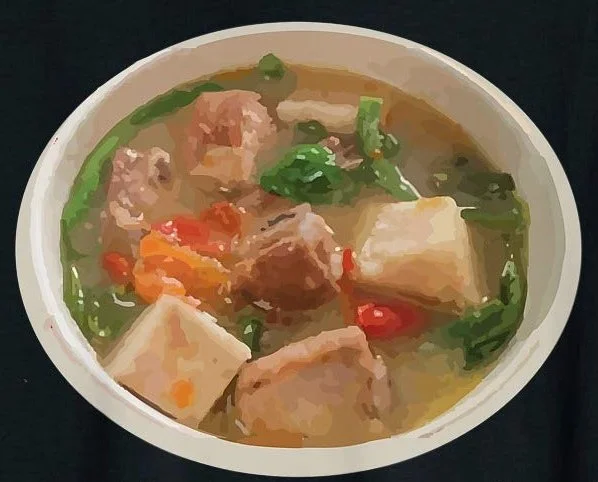
Sinigang is not one specific dish but a method of stewing fish, prawns, chicken, beef or pork in a broth soured by fresh fruit and enriched with a wide variety of vegetables.
Contrary to popular belief and practice, sinigang is not a free-for-all hodgepodge of anything available. There are strict rules followed by most traditional cooks.
The heart and soul of sinigang is the souring agent that gives the dish its identifying tart flavor. It is made from talbos ng sampalok (young tamarind leaves), green tamarind fruit, ripe but sour tamarind fruit, green mango, ripe guava and kamias (fresh or dried).
With the exception of tamarind leaves, sinigang souring agents are normally boiled in the broth until soft, retrieved and mashed in a bowl with more broth, then returned to the pot.
Save the hugas-bigas (water from the second rinsing of rice) for use in fish sinigang. The rinse water, cloudy with starch from the grains’ surface, provides for a thicker, richer broth; there’s added benefits from the nutrients washed off the rice.
Rice water is not as necessary for any meat sinigang, as animal gelatin dissolves and thickens the broth during the long simmering process.
Onions and tomatoes are the basic ingredients present in all sinigang variants, and there are secrets to releasing their flavors. Slice onions and ripe tomatoes and mash them well in a bowl with coarse salt before adding the whole thing into the pot of broth.
When making fish or shrimp sinigang, add eggplant, long beans (sitaw), okra, kangkong (or green camote tops) and long green peppers to the simmering broth.
For meat sinigang, the vegetables are sitaw, eggplants, okra, kangkong, whole young sweet bell peppers and long green hot peppers.
When in season, add squash shoots and the white flowers of the Katuray tree to any sinigang.
Because acid from the souring agent makes it difficult to properly cook eggplants, long beans, gabi and okra, some cooks pre-cook these vegetables in the sinigang broth before the sour stuff is mixed in, take the veggies out and return the veggies to the pot at serving time.

