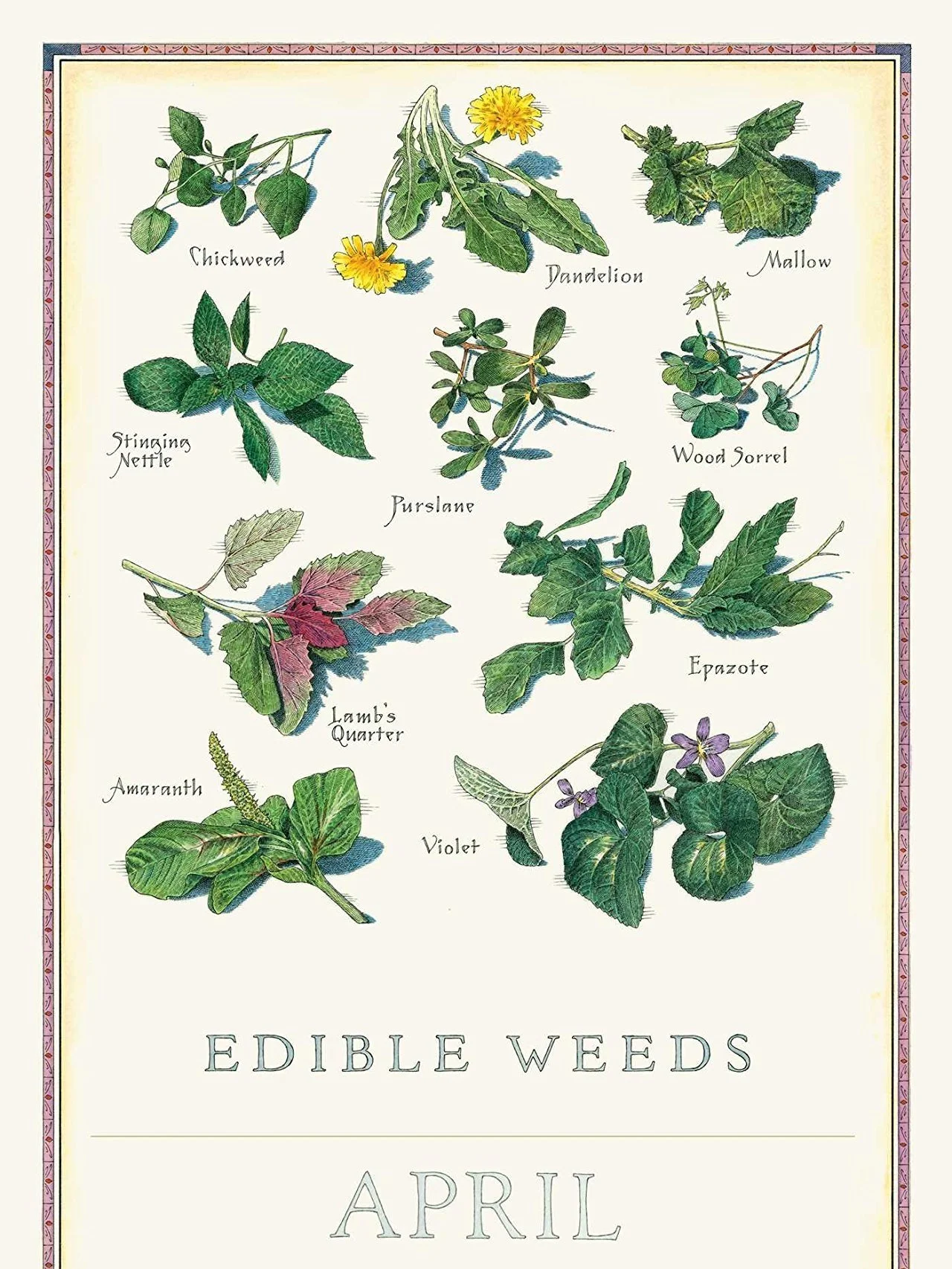
Many of the so-called “weeds” you find in your yard or garden are actually edible—and quite delicious! Save money and add new life to the dinner table by foraging for edible weeds.
Dandelion (Taraxacum officinale) is entirely edible—roots, leaves, and flowers. Young leaves are best eaten raw in salads for a mild flavor, while older leaves become bitter and are better cooked. The flowers can be used fresh or made into wine, and the roots can be roasted as a coffee substitute. Dandelions are highly nutritious, rich in vitamins A, C, and E, and have a long history of culinary and medicinal use.
Purslane (Portulaca oleracea) is a succulent weed with edible leaves, stems, and flower buds. It is best enjoyed raw in salads or lightly cooked, offering a juicy, slightly sour flavor. Purslane is notable for its high content of omega-3 fatty acids and vitamins A and C. Care should be taken to distinguish it from the toxic hairy-stemmed spurge.
Plantain (Plantago major) leaves and seeds are edible, though the leaves are somewhat tough and bitter, making them preferable cooked rather than raw. They can be added to soups or sautéed, and the seeds can be eaten as well. Plantain also has medicinal uses, such as soothing skin irritations. It is a common, non-toxic weed found in lawns and compacted soils.
Chickweed (Stellaria media) is a mild-flavored weed whose young shoots and tender tips can be eaten raw in salads, cooked, or dried for tea. It is generally considered safe and palatable, especially when young and tender.
Lambsquarters (Chenopodium album) has edible young leaves and stems, which can be eaten raw or cooked like spinach. It is highly nutritious, providing substantial amounts of vitamins A and C, calcium, and dietary fiber. However, mature plants accumulate oxalic acid, so young parts are preferred.
Creeping Charlie (Glechoma hederacea) has edible leaves that are often used in teas or as a mild herb in salads. The flavor is somewhat minty, and it is safe to consume in moderation.
Common mallow (Malva spp.) leaves, flowers, and immature seeds are edible raw or cooked. The leaves have a mild, mucilaginous texture and are often used in salads, soups, or as a thickener. They are considered safe and nutritious.
Young stinging nettle (Urtica dioica) leaves are edible and highly nutritious once cooked or dried, which neutralizes the sting. They can be used like spinach in soups, teas, or sautés. Raw nettles should not be eaten due to their stinging hairs.
Wood sorrel (Oxalis spp.) leaves, flowers, and seed pods are edible and have a tangy, lemony flavor due to oxalic acid. They are best used sparingly as a garnish or in salads, as excessive consumption of oxalic acid can be harmful.
Lamb's quarter (Chenopodium album) young leaves and stems are edible raw or cooked, similar to spinach, and are highly nutritious. Older leaves should be cooked to reduce oxalic acid content.
Epazote (Dysphania ambrosioides) leaves are edible and used as a culinary herb, especially in Mexican cuisine, but should be consumed in moderation due to potential toxicity from certain compounds if eaten in large amounts.
Amaranth: Both the young leaves and seeds of amaranth (Amaranthus spp.) are edible. Leaves can be eaten raw or cooked, while seeds can be cooked as a grain. The plant is highly nutritious but, like many greens, contains oxalic acid.
Common violet (Viola spp.) leaves and flowers are edible raw or cooked. Leaves are mild and nutritious, and flowers are often used as a decorative edible garnish.
Nasturtium (Tropaeolum majus): All above-ground parts—leaves, flowers, and unripe seeds—are edible with a peppery flavor. Nasturtiums are safe and popular in salads and as garnishes.
Red Clover (Trifolium pratense): Red clover flowers and young leaves are edible raw or cooked, often used in teas or salads. Flowers can be tough, so are best used sparingly.
Bamboo (Fargesia spp.): Young bamboo shoots are edible when cooked, but must be boiled to remove bitterness and potential toxins (cyanogenic glycosides). Mature shoots are too fibrous to eat.
Daylily (Hemerocallis spp.): Daylily buds, flowers, and tubers are edible cooked or raw, with a mild, sweet flavor. Some individuals may experience digestive upset, so try in small amounts first.