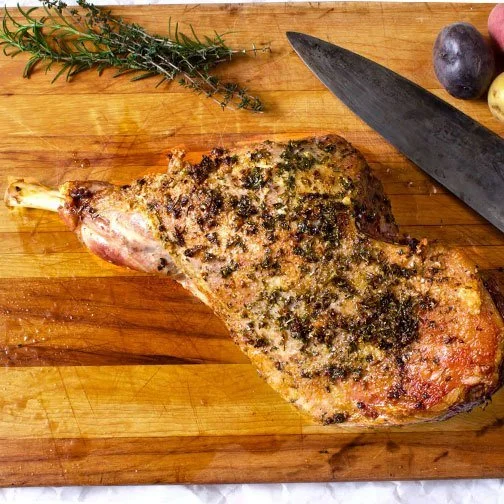
This May 7 food holiday celebrates the leg of lamb, a mild and tender cut of tasty meat popular for over 10,000 years. Best when roasted and cooked with fresh herbs.
But roast leg of lamb is more than just a meal — it is a dish steeped in religious symbolism, seasonal renewal, and communal celebration, making it a cherished tradition in many cultures.
Often associated with spring, renewal, and fertility, lamb was often the first fresh meat available after winter in agrarian societies. This made it a centerpiece for springtime and Easter celebrations in countries like Greece, France, and Italy, where dishes like roast leg of lamb (gigot d’agneau, agnello al forno) are served at family gatherings and religious feasts.
In Greece and Bulgaria, roasting a whole lamb is a key part of Easter festivities, symbolizing community, abundance, and spiritual renewal. In the Middle East and North Africa, lamb is central to Eid al-Adha, representing faith and devotion. In India, lamb is featured in celebratory dishes during weddings and festivals, reflecting its role in marking special occasions.